



Installation view Dilek Winchester The Wound is Our Place, der TANK, 2026, photo: Christian Knörr
Installation view Dilek Winchester The Wound is Our Place, der TANK, 2026, photo: Christian Knörr
Installation view Dilek Winchester The Wound is Our Place, der TANK, 2026, photo: Christian Knörr
Installation view Dilek Winchester The Wound is Our Place, der TANK, 2026, photo: Christian Knörr
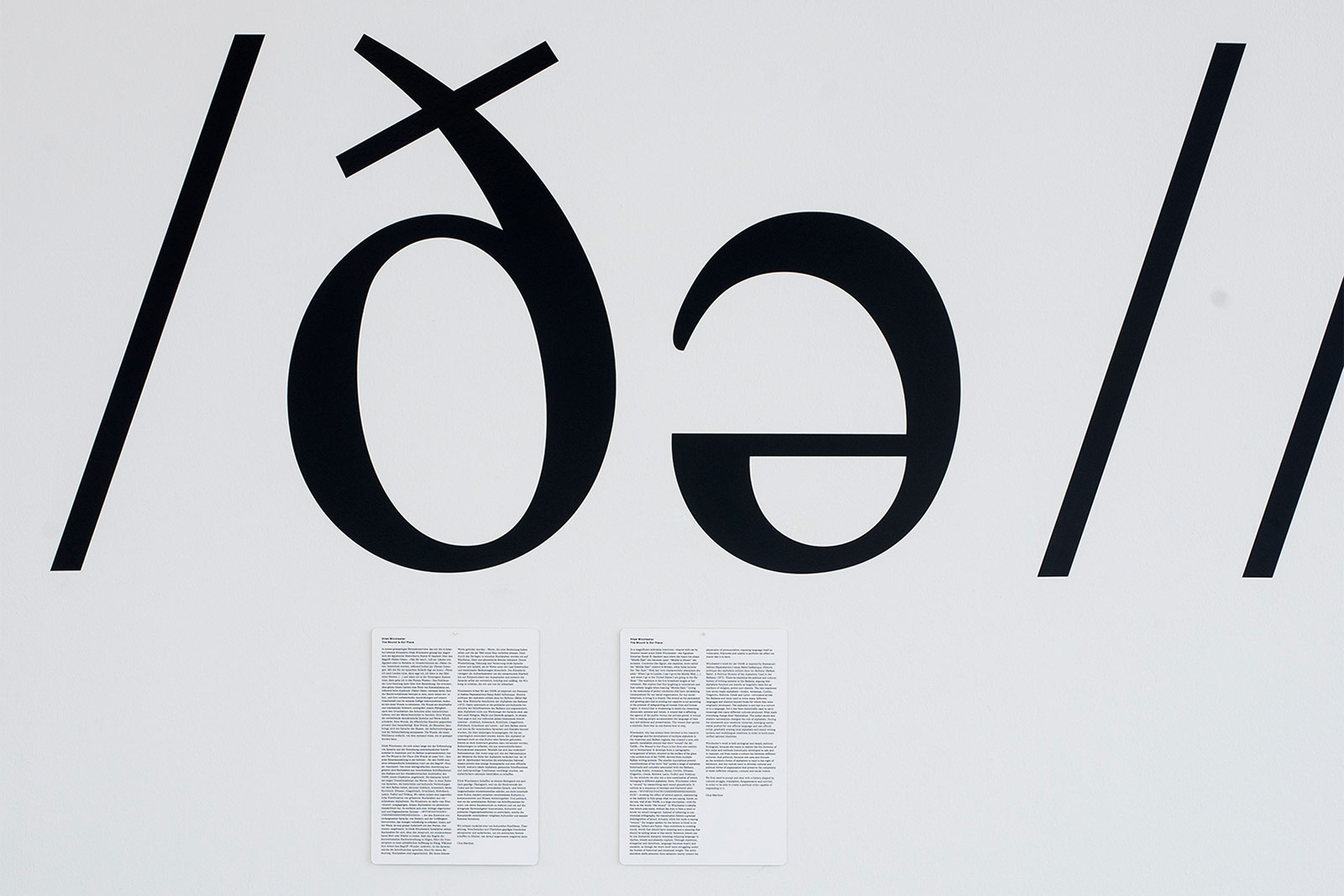
Installation view Dilek Winchester The Wound is Our Place, der TANK, 2026, photo: Christian Knörr
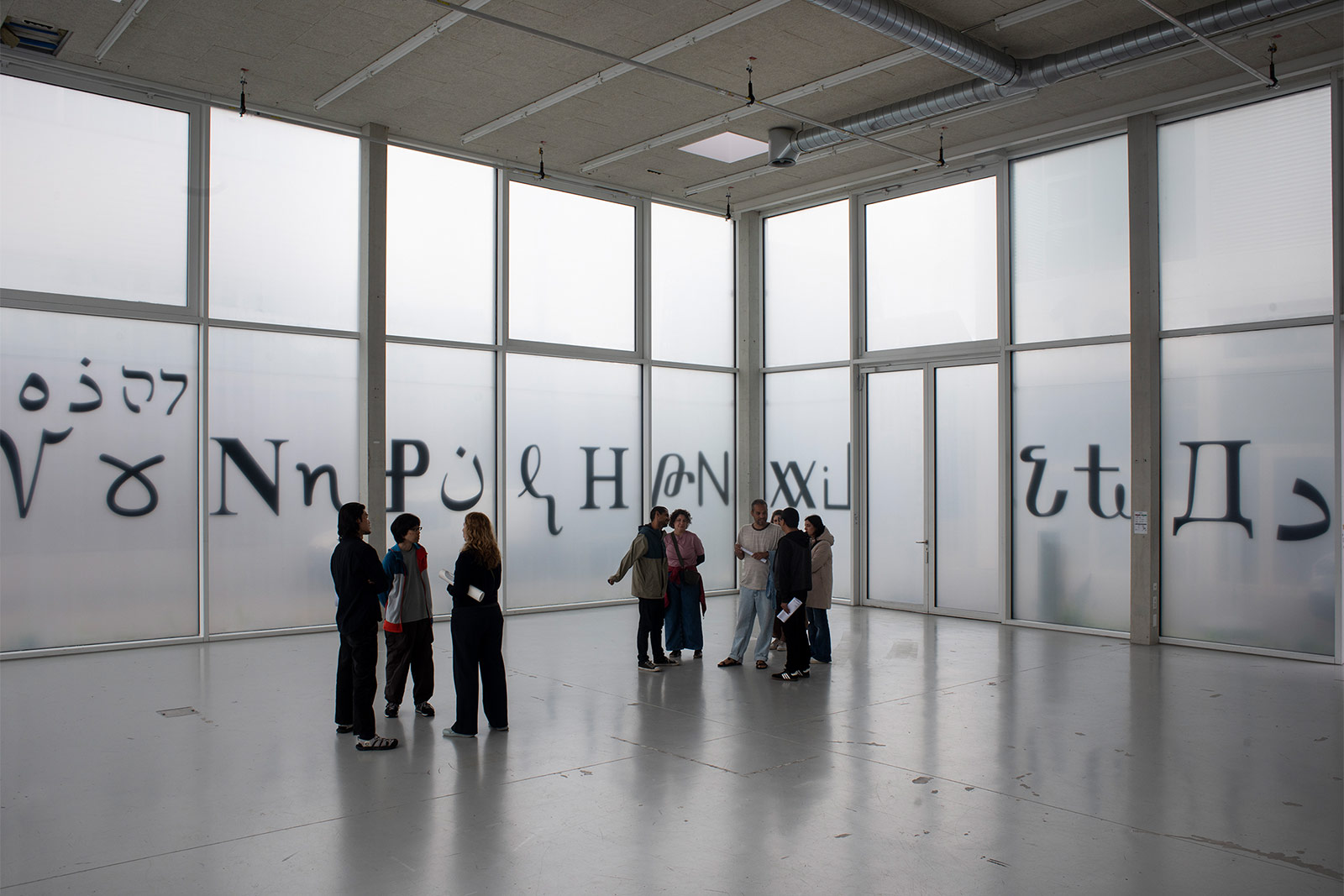
Installation view Dilek Winchester The Wound is Our Place, der TANK, 2026, photo: Christian Knörr
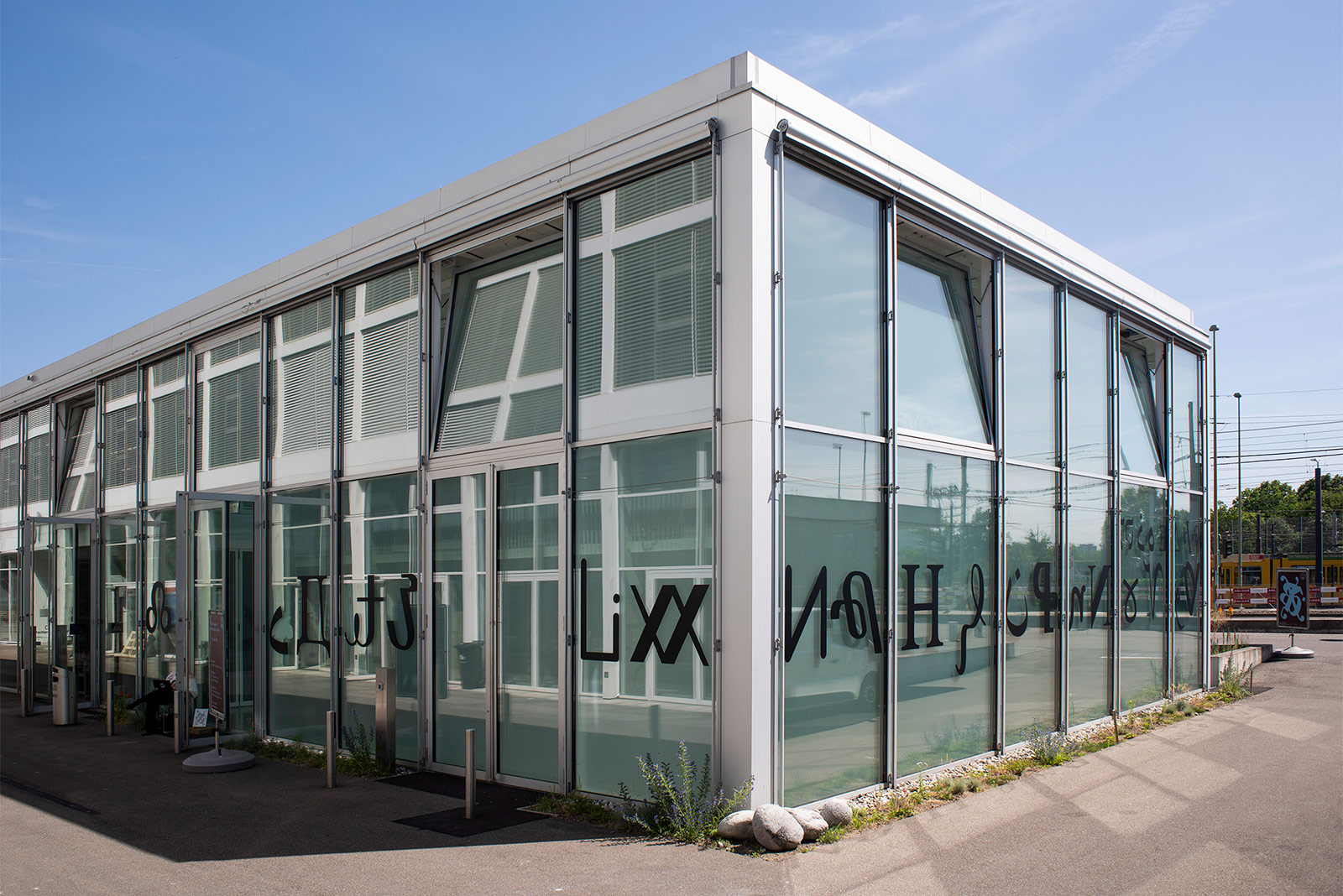
Installation view Dilek Winchester The Wound is Our Place, der TANK, 2026, photo: Christian Knörr
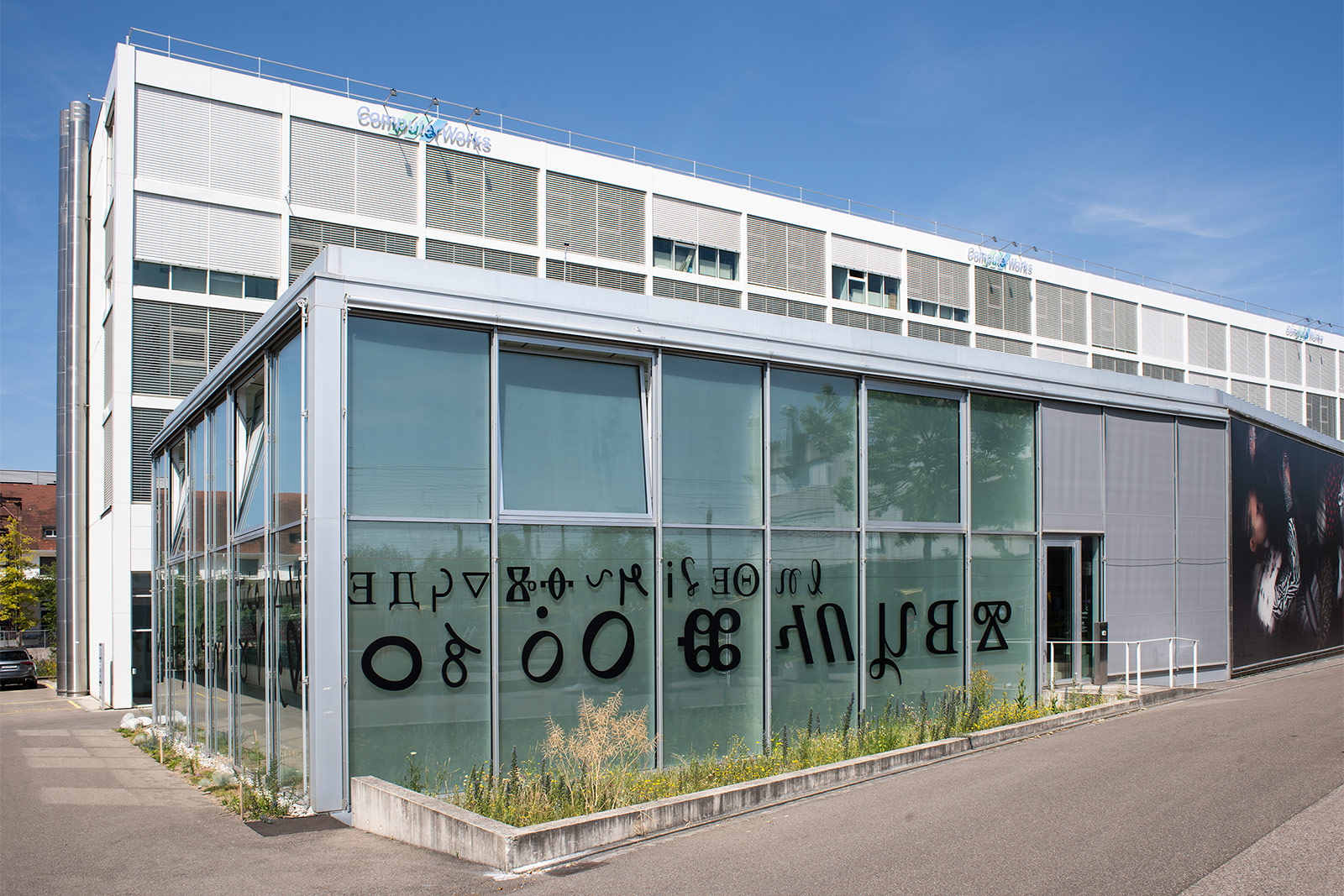
Installation view Dilek Winchester The Wound is Our Place, der TANK, 2026, photo: Christian Knörr
The Commissions
Dilek Winchester
The Wound is Our Place
Curated by Chus Martínez
Curatorial assistance Marion Ritzmann
Exhibition 13 – 21 June 2026
Special Opening Wednesday 17 June 2026, 6 – 9 pm
As part of Art@Dreispitz
Wed 17 June 2026, from 4 pm
Atelier Mondial, HGK Basel FHNW with CIVIC and der TANK, HEK, Kunsthaus Baselland
Freilager-Platz / Helsinki-Strasse, Dreispitz, Basel/Münchenstein
→ more information
How to get to der TANK:
From the Basel SBB station take the tram 10 or 11 until the stop Dreispitz. Follow the main street and walk straight ahead for about 5 minutes until you reach der TANK right after a large Porsche showroom and just before the HGK Basel FHNW tower building.
Opening hours:
Sat 13 and Sun 14 June 2026, 2 – 6 pm
During Art Basel:
Wed 17 June 2026, 10 am – 9 pm
Thur 18 to Sun 21 June 2026, 2 – 7 pm
→ And by appointment
In a magnificent television interview—shared with me by Istanbul-based artist Dilek Winchester—the Egyptian historian Nawal El Saadawi says when she hears the phase “Middle East” she becomes upset. “Middle to whom?” she screams. Countries like Egypt, she explains, were called the “Middle East” relative to Britain, while India became the “Far East.” With her very characteristic sharpness she adds: “When I go to London, I say I go to the Middle West, [...] and when I go to the United States I am going to the Far West.” The audience in the live broadcast laughs at her comment. She replies that this laughing is colonialism and that nobody laughs when hearing “Middle East.” Living in the awareness of power conditions that have devastating consequences for our social organization, for our social behaviors, is living in a wound. The wound as the permanent and growing pain that is eroding our capacity to act according to the premise of safeguarding all human lives and human rights. A wound that is weakening to death the remaining democratic systems and values. A wound that is affecting the agency of the public versus the private greed. A wound that is making people accommodate the language of hate and self-defense and preservation. The wound that ignites a nihilistic flare that no one knows how to stop.
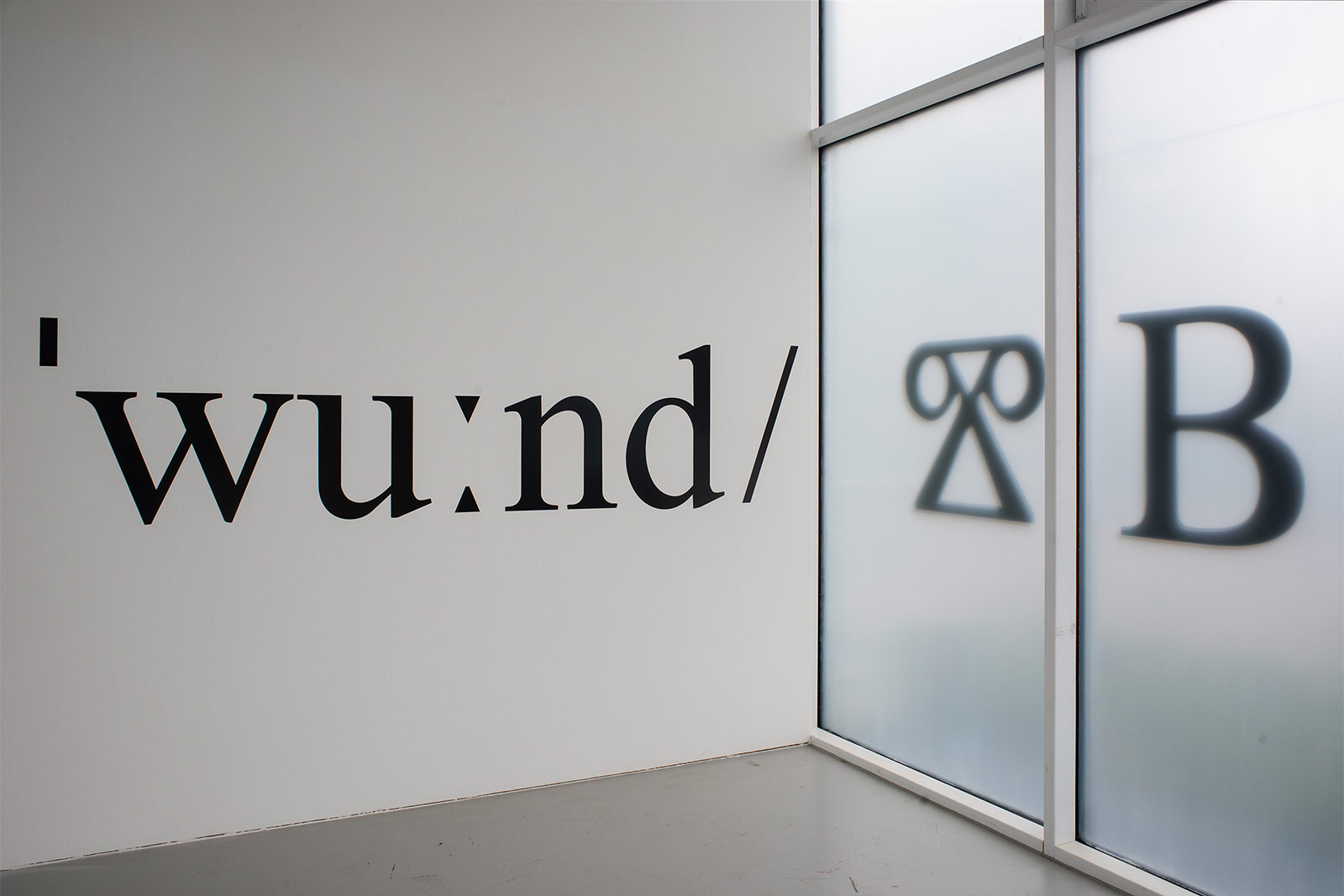
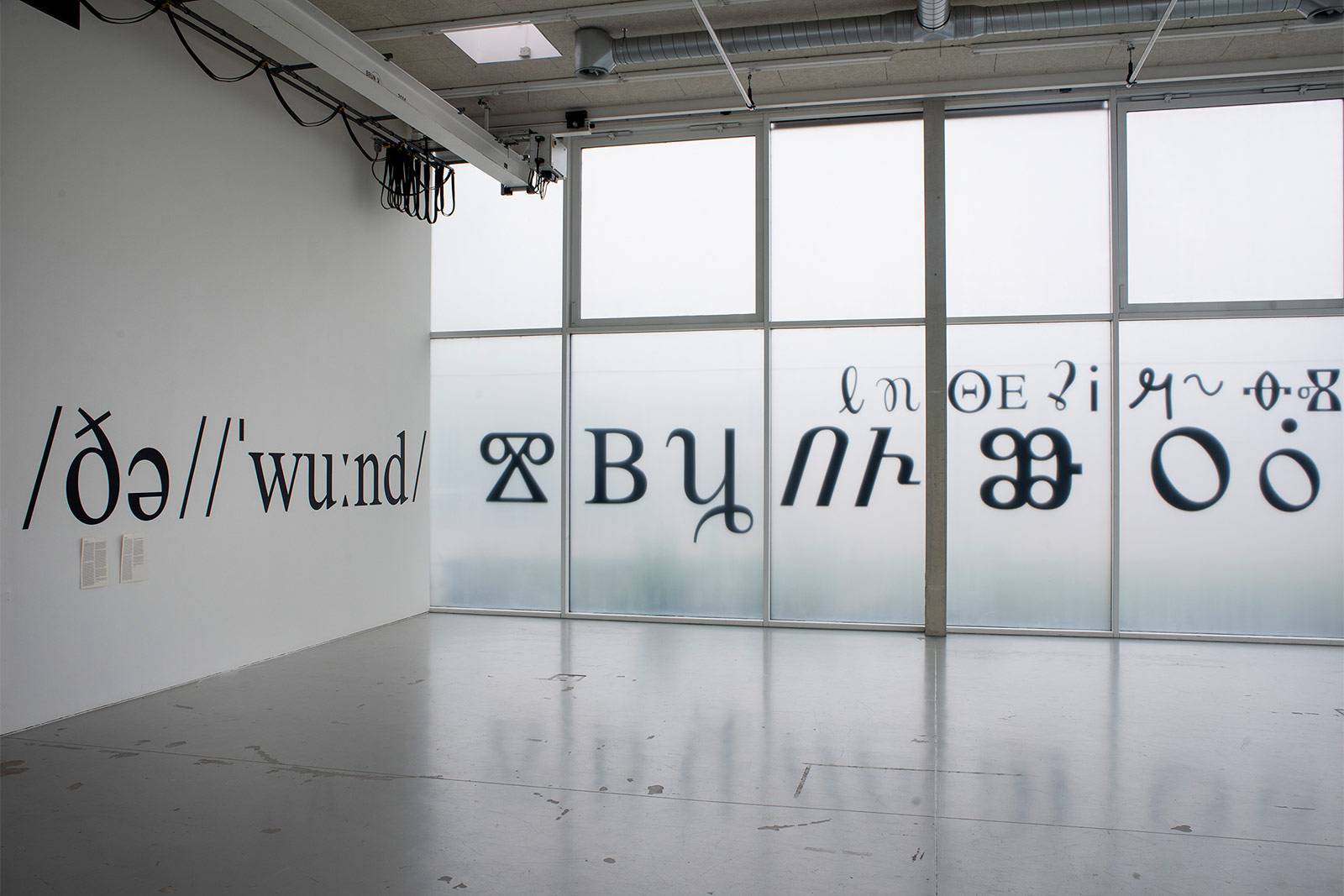
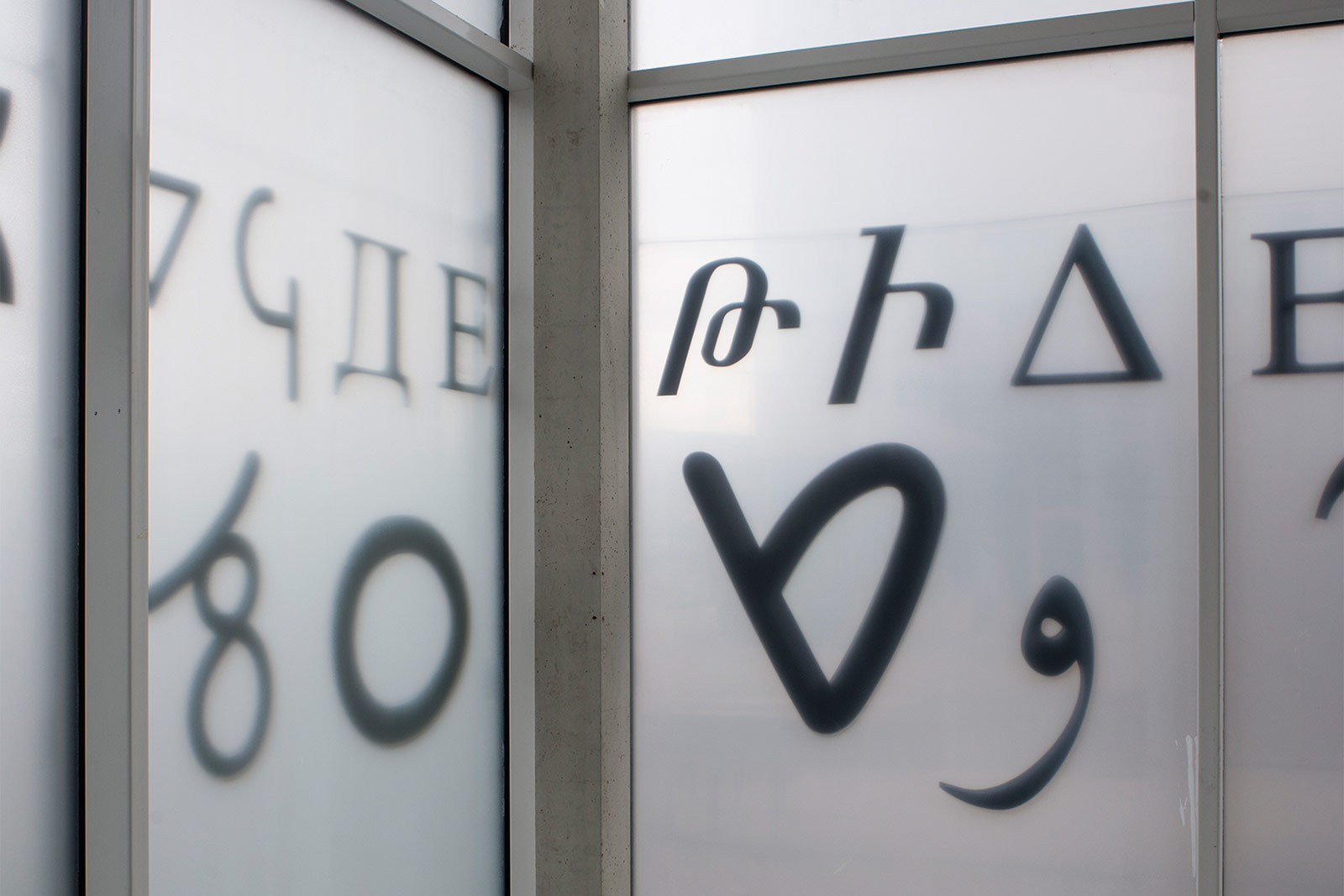
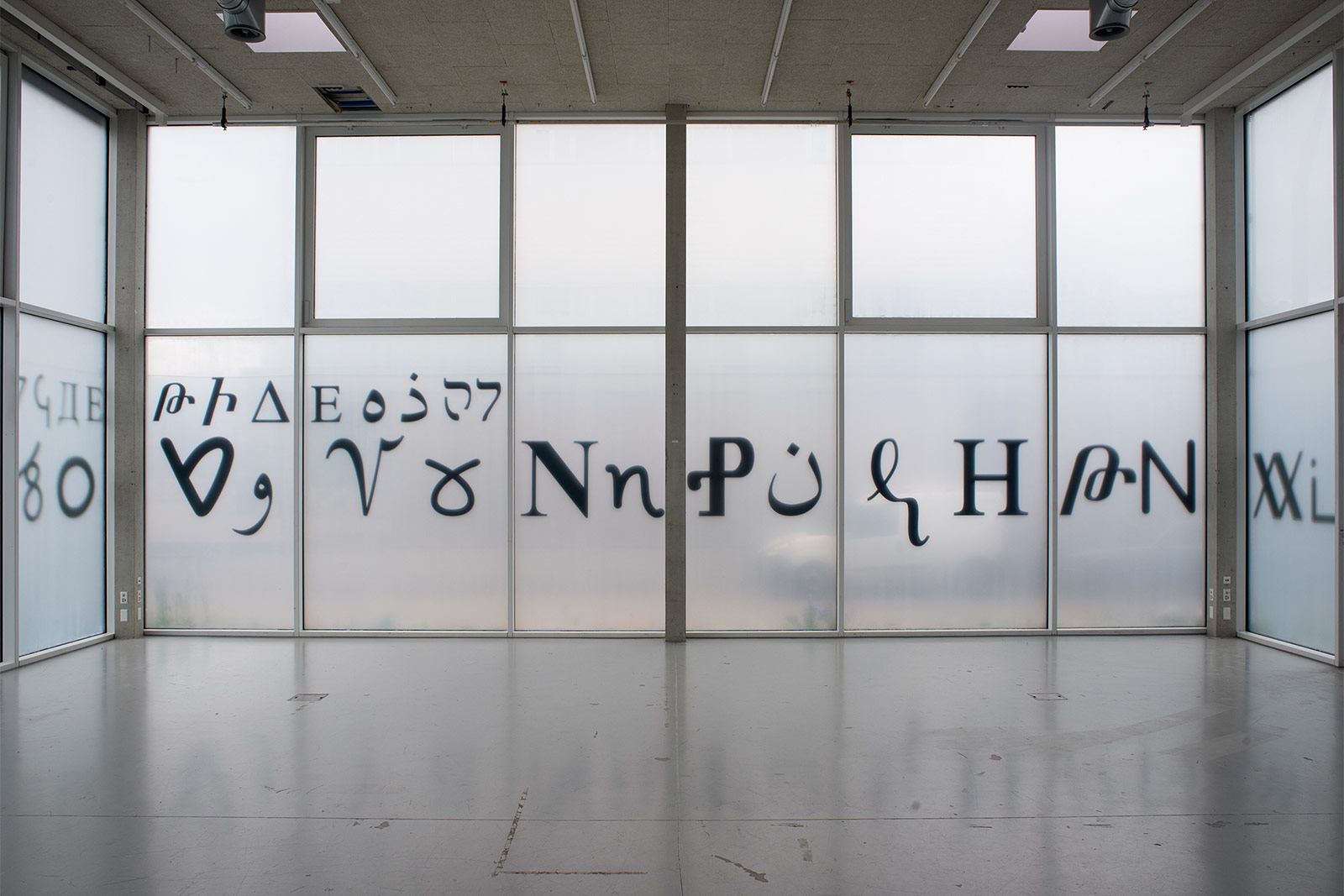
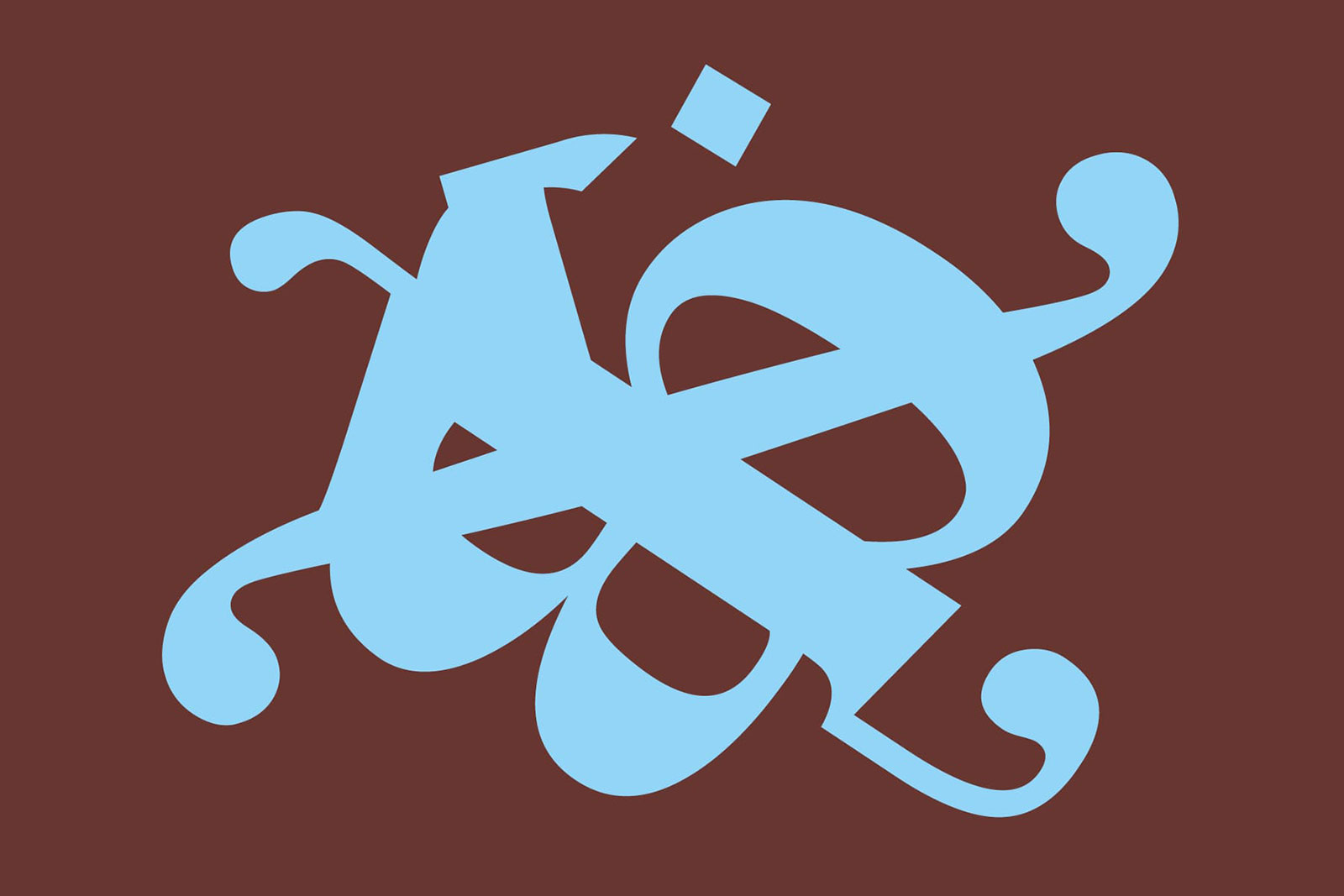
Winchester, who has always been devoted to the research of language and the development of multiple alphabets in the Anatolian and Balkan regions, has created a new, site-specific installation around that word “wound” for der TANK—The Wound is Our Place is her first solo exhibition in Switzerland. It develops from a cartographic arrangement of letters, situated on the surface of the glass cube architecture of der TANK, derived from multiple Balkan writing systems. The smaller inscriptions present transliterations of the word “the” across a range of alphabets historically and culturally associated with the Balkans, including Arabic, Armenian, Berat, Cyrillic, Elbasan, Glagolitic, Greek, Hebrew, Latin, Todhri and Vithkuqi. On the windows we also see a rare combination of letters belonging to different alphabets. Here, Winchester refers to “wound” by transcribing each sound phonetically. It unfolds as a sequence of hesitant and fractured utterances—“WVVWUOUVOUWUUNNNNNNNNNDNDNDDDDD”—evoking the effect of slowed speech, stammering or the inability to fully grasp what we are saying. Inside, on the only wall of der TANK, is a large inscription—with the focus on the words “the wound”. In Winchester’s installation letters pose alone, without the duty to form a word or words we would recognize. Instead of adhering to conventional orthography, the transcription follows a gradual disintegration of sound. Actually, while her work is saying “wound,” the tongue spoken by the letters is blind to its meaning.
The Wound is Our Place at der TANK is Winchester’s first solo exhibition in Switzerland. She is currently a resident at Atelier Mondial in Basel/Münchenstein, in immediate proximity to der TANK and Campus Dreispitz, by invitation from the Institute Art Gender Nature HGK Basel FHNW, as part of HGK Basel @ Atelier Mondial. Both the exhibition and residency are supported by SAHA.
